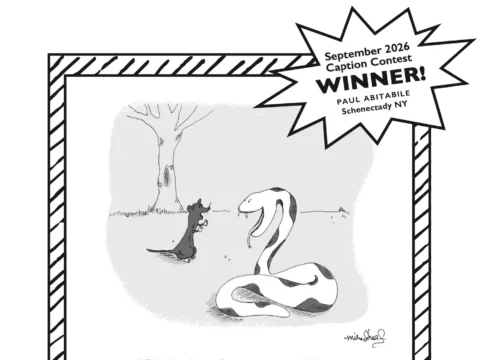
A conversation with Melanie Chartoff and Ron Placone about exploitative streaming services, cross-border solidarity, and comedy as a catalyst for change
This discussion is excerpted from The Funny Times Podcast, which explores the history of humor — and the relationships and stories our paper has cultivated over the past 40 years in print.
On the podcast we have a chat with actor and writer Melanie Chartoff and comedian Ron Placone. Funny Times readers will know Ron from his cartoon Lucy and Ron about life with his beloved cat, Lucy, who sadly passed away last year. Ron’s also an actor and stand-up comedian who hosts a podcast where he sets out to interview 1000 interesting people.
Melanie is a longtime Funny Times contributing writer, but you might also know her from her extensive acting career, including roles on Ally McBeal and Seinfeld and the voice of Didi Pickles on the Nickelodeon cartoon Rugrats. She’s featured in the Andy Kaufman documentary “Thank You Very Much,” and her first book Odd Woman Out is available now.
These two met at a Funny Times Live event awhile back, and they have a lot to say about humor, creativity, and politics in turbulent times. They also talk about the power of humor to shape the world for good and for bad. Here are some excerpts from their discussion:
Problems with Streaming Services
Melanie Chartoff: I’m on a series right now that was shot in 1989-1991 that’s running on a network called FlexTV.com. I’m getting fan mail about it and we haven’t seen a dime now. We had a contract in place, we did the show, and didn’t have anything to do with streaming that hadn’t been conceived yet. I called SAG and they’re completely flummoxed as to what to do, how to get us any money out of this at all. It’s running quite freely full episodes and I have to pay for the stamps to mail back to my fans, who are sending me pictures to autograph, pictures that were taken and then sold without me getting a dime in the syndicated marketplaces. I feel kind of resentful because we actors get paid a little when we work, but most of us live on residuals. That’s one of the things we struck for the Writers Guild and the actors guild two years ago, to get that straightened out. I feel like it’s a losing battle at the moment. It just feels very frustrating.
Ron Placone: It is very frustrating and to look at something contemporarily and feel free give me your insight on this, Melanie. In 2007 or 2008, I was starting in stand-up and I was not in Los Angeles, but I know when the strike happened. A lot of people didn’t know what streaming was going to be like. No one knew what was going to happen. They came up with this new media policy that allowed them to not pay people fairly. It was a really unfortunate, unrolling circumstance. Of course, the people at the top are going to exploit the artists because that’s been happening since the beginning of human history.
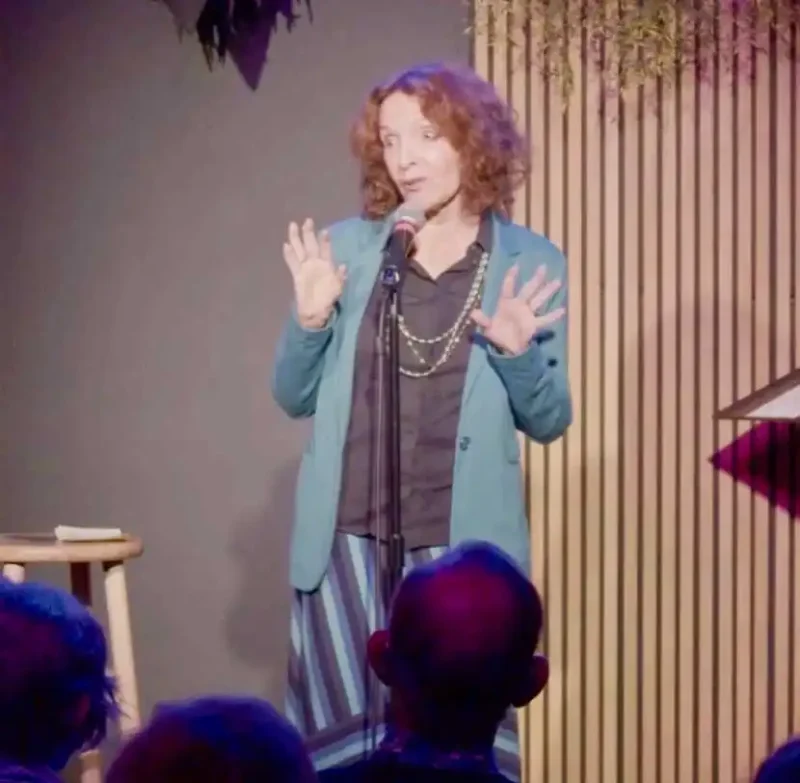
Coming together in trying times
Melanie Chartoff: I love that Denmark made an offer to buy California.
Ron Placone: Oh God, can we please take them up on it?
Melanie Chartoff: That was so wonderful. They said, “We want some palm trees. Would you like some schnitzel?” I love expressions like that of humor and satire, because it shows that people all over the world are tuned into what we’re going through. They sympathize, they understand, they’re not going to blame it on all of us. I always want to carry a button that says “not my president” when I travel now, so I can’t be blamed. I try to be the neatest American I can possibly be. I over tip, I overspend, I do everything I can to ingratiate Americans in their hearts because the world order is just kind of falling apart right now and all you can hope for is kindness between individuals.
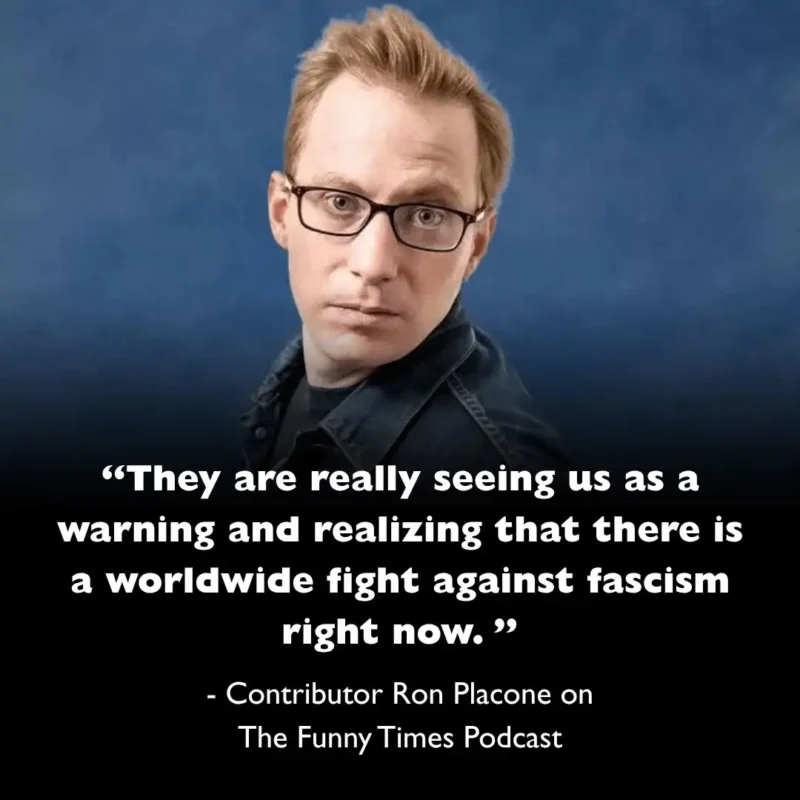
Ron Placone: Oh, absolutely. I just got back from Thailand. I spent the first couple weeks of the year in Thailand on a very belated honeymoon. We ended up doing a show in Chiang Mai, which was really interesting. I got to talk to a lot of people afterwards about what’s going on in the world. There were people from Denmark, from the UK, from the Netherlands and there were people from different parts of Asia. They all had similar questions and they were saying things to me like, “We’re in this too. Your government affects the world.” I’m like “I know, I promise you I didn’t vote for him.” I guess the one positive in all this is that we’re realizing that we’re one world and coming together in that when you hear Nigel Farage say something in favor of Trump, the UK was just not having it. They are really seeing us as a warning and realizing that there is a worldwide fight against fascism right now. They’re on the front lines too, because they have people like Nigel Farage, Boris Johnson’s ilk and they’re like “Yeah, we really gotta, we really gotta nip this in the bud big time.
The Power of Humor
Mia: I have noticed that political satire and political humor, one of the purposes that it seems to be serving right now is that it makes the news a little more digestible. Adding things that are kind of informative with a little bit of humor is helping people keep up with the news, because it’s this endless barrage of sort of bad news and we are not allowed to look away right now. We have to be vigilant and pay attention to what’s going on in the world. Humor can really help that.
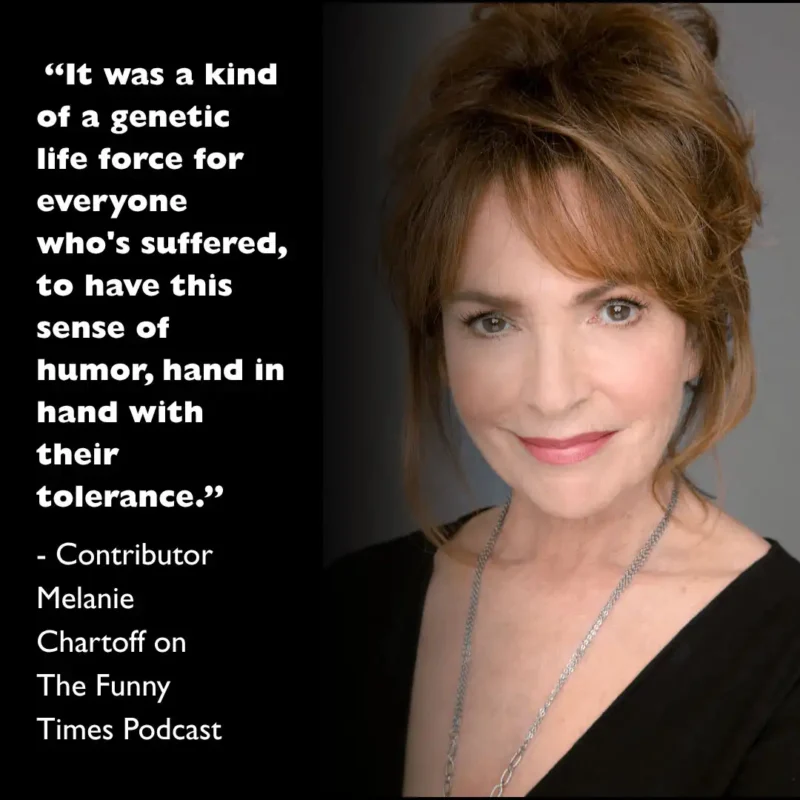
Melanie Chartoff: Larry David had a director named Larry Charles. Larry Charles was a writer on Fridays at one of the first shows I did out here [in Los Angeles], and he directed a lot of Curb your Enthusiasm and Seinfeld. He wrote a Seinfeld that I was in, and he’s a very odd, unusual kind of person, and he’s produced a series called Searching for Comedy, a documentary series where he went to the war torn Congo he went to the most anguished societies and interviewed the victims and Holocaust survivors and all kinds of people that somehow lived through a horrible trauma. The thing they all had in common was this mad sense of humor. They all like women who had their fingers cut off by some captor still making jokes about him. It was a kind of a genetic life force for everyone who’s suffered, to have this sense of humor, hand in hand with their tolerance.
Ron Placone: Well, I think back to if I had to list my favorite stand ups it would be Bill Hicks and George Carlin. Back during the first Iraq war, that was a war that was very popular in the country and a lot of people were for it. Then you had Bill Hicks going after the war, night after night in clubs and then all over the world. Carlin, around that time too, put out jamming in New York on HBO in prime time about 20 minutes after that war. It really did its role in swaying public opinion. I don’t agree with everything he’s been saying, especially as of recent but Jon Stewart had something that he said not too terribly long ago that I did really appreciate, where he said something like “Comedy and art doesn’t necessarily bring about change on its own, it accompanies it. It can be the catalyst for somebody to look at something differently or explore an idea that they weren’t into before.”
This interview has been edited for length and clarity.
This conversation is an excerpt from The Funny Times Podcast, a series celebrating the 40th anniversary of Funny Times. Listen to the full episode:
If you’re interested, click here to see more of Ron Placone’s work and click here to see more of Melanie Chartoff’s work.